Common Mistakes When Buying Antique Clocks at UK Fairs
Common Mistakes When Buying Antique Clocks at UK Fairs
A good clock fair is one of the great pleasures of British buying. Rows of longcase clocks ticking out of step in a village hall, a bracket clock with its original glass, a dealer who knows the difference between a replaced finial and an old repair. Then there is the other side of it: bad light, a table three deep in customers, cash in your pocket and a voice in your head saying the thing will be gone in ten minutes. Most clock-buying regrets are made in those ten minutes. What follows are the mistakes that come up again and again, and the small checks that catch them. None of them require you to be a trained horologist, but all of them require you to slow down and look properly.
Missing movements and missing parts
Movements are often worth more than the cases that hold them, which is why clocks get broken up. A longcase case may turn up with a quartz movement screwed to the backboard, or with nothing inside at all. A carriage clock may have lost its platform escapement; a bracket clock may carry a later, smaller movement that rattles around on old screw holes. Before you admire anything else, establish that the movement is there, that it is of the right period for the case, and that it is complete: weights, pendulum, key, bell or gongs, and the fixings that hold it in place.
Look at the seatboard and the inside of the case. An original movement leaves a shadow — worn patches, impressions in the wood, old screw holes that line up with its feet. A substitute tends to sit lightly, with crisp new holes appearing next to old ones. Weights and pendulums go astray over the years, and replacements are not always easy to match. A missing key is a small matter; a missing original pendulum or a set of matched weights can be expensive and slow to put right.
Then ask to hear it strike. Wind the hands slowly past twelve and on to one while the seller watches, and listen to whether the strike agrees with the hands. If it does not, or the sequence is wrong, there is work to be done. Treat "it only needs a clean" with polite scepticism. A movement that has stood idle for years often needs more than oil, and that is a job for a qualified horologist rather than a hopeful Saturday afternoon with a screwdriver.
On older longcase clocks, look for the fusee and its line or chain. A perished gut line is normal and replaceable, but a missing chain or a butchered barrel is a warning. Ask when the clock was last serviced and by whom. If the answer is vague, assume a service is due and factor the cost into your offer.
Dials that have been replaced or repainted
The dial is the first thing you see and the easiest thing to have swapped or improved. Painted dials are frequently repainted, and a good job can be hard to spot in poor light. Look for lettering that is too sharp, colours that are too bright, and a surface with none of the fine cracking that comes with age. A maker's signature that sits at an odd angle, or sits on a dial whose style belongs to a different period, deserves a second look. If the case looks like 1780 and the dial looks like 1840, one of them is telling the truth and the other is not.
Brass dials are just as vulnerable. Chapter rings get re-silvered to a brilliant white, and the wax infill in the engraving gets redone in a shade that is too red. On enamel dials, chips and hairline cracks are sometimes filled with paint; hold a torch at a low angle across the surface and the repairs will catch the light differently from the rest.
Finally, check the dial feet. Dials are fixed by small feet that pass through the front plate of the movement, and the position of those feet varies from maker to maker. If you can see the plate, look for unused holes that do not correspond to any foot. Extra holes are a strong hint that this dial did not begin life on this movement. Hands matter too: a mismatched pair, or bright modern steel where the originals would have been blued, tells the same story.
Over-restoration: when clean is worse than worn
Shine is not the same as condition. Brass polished to a mirror has lost the surface it took a century and a half to acquire, and with it much of the evidence of how it was made. A case that has been stripped and repolished has lost its original finish, and sanding has often thinned the veneer in the process. Finials, feet, plinths and mouldings are commonly replaced, sometimes in the wrong timber and sometimes in resin.
Heavy restoration also hides things. Filler and wax cover worm damage; fresh hinge plates and cross-head screws sit where you would expect old ironwork. Turn the clock round and look at the base and backboard, tap the case and listen for a hollow note, and check underneath for fine dust. Beware of "museum quality" as a description: it usually means restored to a standard the clock never had when it left the workshop. A clean, honest clock with old repairs is often a better buy than a gleaming one with no history left.
"It only needs a clean" and "museum quality" are two phrases worth translating before you open your wallet.
Provenance, paperwork and the story that sells the clock
Fair dealers are often knowledgeable, and many are honest. But a good story can add hundreds of pounds to a clock, so it is worth separating fact from atmosphere. Ask what is known about the previous owner, where the clock came from, and whether any service records or auction labels survive. An old paper label on the backboard, a faded repairer's mark, or a receipt from a long-gone shop can be genuinely useful. A typed label from last week is not provenance.
If the seller says the clock came from a country house, ask which one. If they say it belonged to a naval officer, ask for a name. You are not being rude; you are doing the same thing a good dealer would do. Anything that matters to the price should be written on the receipt: maker, approximate date, movement type, and any known replacements. A receipt that says only "antique clock" is not much help if you later discover the dial feet do not match.
Fair-day practicalities: light, time and tools
Most of the mistakes in this article happen because the buyer is rushed, dazzled or cramped. A few simple habits prevent most of them. Walk the fair once before you buy anything. Note prices, compare condition, and let the first flush of excitement pass. Then go back to the clocks that still interest you. It is remarkable how often a clock that looked wonderful at eleven o'clock looks tired by noon.
Carry a small torch, a magnifying glass, a soft cloth and a tape measure. Ask permission before touching anything, and never force a door, a key or a hand. If the dealer will not let you inspect the movement or hear it strike, that is information in itself. If you are serious, ask for the clock to be put aside while you fetch a second opinion, or ask for a written description and a return policy. Cash may get you a better price, but a card or bank transfer leaves a record.
- Light: use your torch across dials, veneers and repairs, not just straight on.
- Time: do not buy in the first ten minutes, however good the clock looks.
- Tools: torch, magnifier, tape measure, notebook, soft gloves.
- Questions: movement, dial, case, service history, replacements, return policy.
A short checklist before you pay
- Is the movement present, complete and broadly correct for the case?
- Do the strike and hands agree when you wind past twelve?
- Are the dial, hands and dial feet consistent with the movement?
- Has the case been stripped, sanded or heavily replaced?
- Are there old repairs that have been left honest, or fresh filler hiding damage?
- Does the price reflect the work needed, not just the look of the clock?
- Have you been given a clear receipt with the seller's details and description?
- Would you still want it if the fair disappeared and you had to live with it for ten years?
The best fair purchases are rarely the most dramatic. They are the clocks with sound movements, honest dials and cases that show their age without apology. If you miss one, another will come along. If you buy well, you will enjoy it every day; if you buy badly, you will pay for it twice — once at the fair and again at the repairer's bench. Take your time, ask the awkward questions, and let the ticking do the selling.
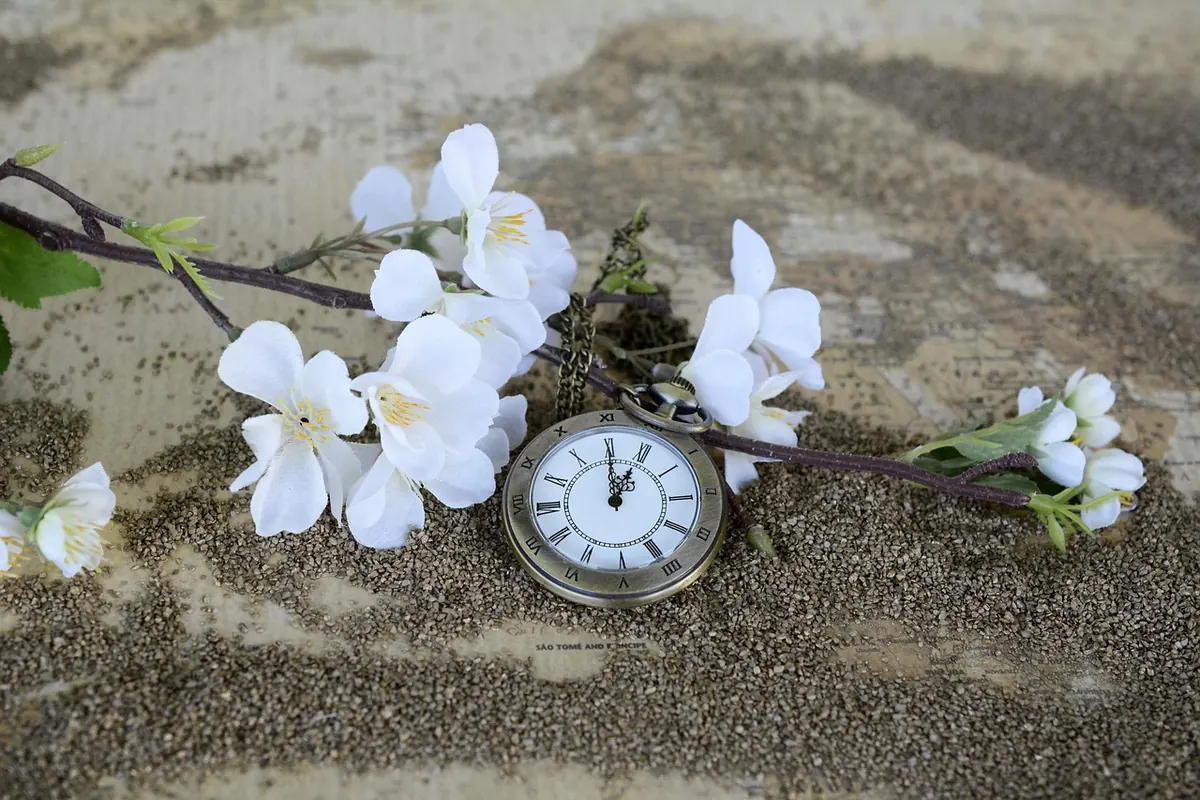
Photo: anncapictures / Pixabay